There is an invisible weight that sometimes overwhelms us when we wake up in the morning. This heaviness of the soul, which prevents us from seeing the brightness of the day, can become such a burdensome load that it makes us forget the very meaning of life.
Life is a challenge; it is up to you to rise to it
If sadness is very present, it is undoubtedly for a reason. To appreciate the day, we must know how to cross and contemplate the darkness of the night. Sadness is the night of the soul, and it has its benefits for all those who take the time to see it as an ally and not as an enemy.
Sadness as a guide to the depths
If sadness feels heavy, it is partly because it is associated with darkness, the unknown, a dimension that frightens us, a bit like a diver sinking into the abyss. Yet depth is what gives value to who we are. Someone who uses their sadness to become a deeper person will inevitably achieve wonders in terms of empathy, understanding others, taking a step back, and showing kindness.
Use your sadness, do not let it overwhelm you
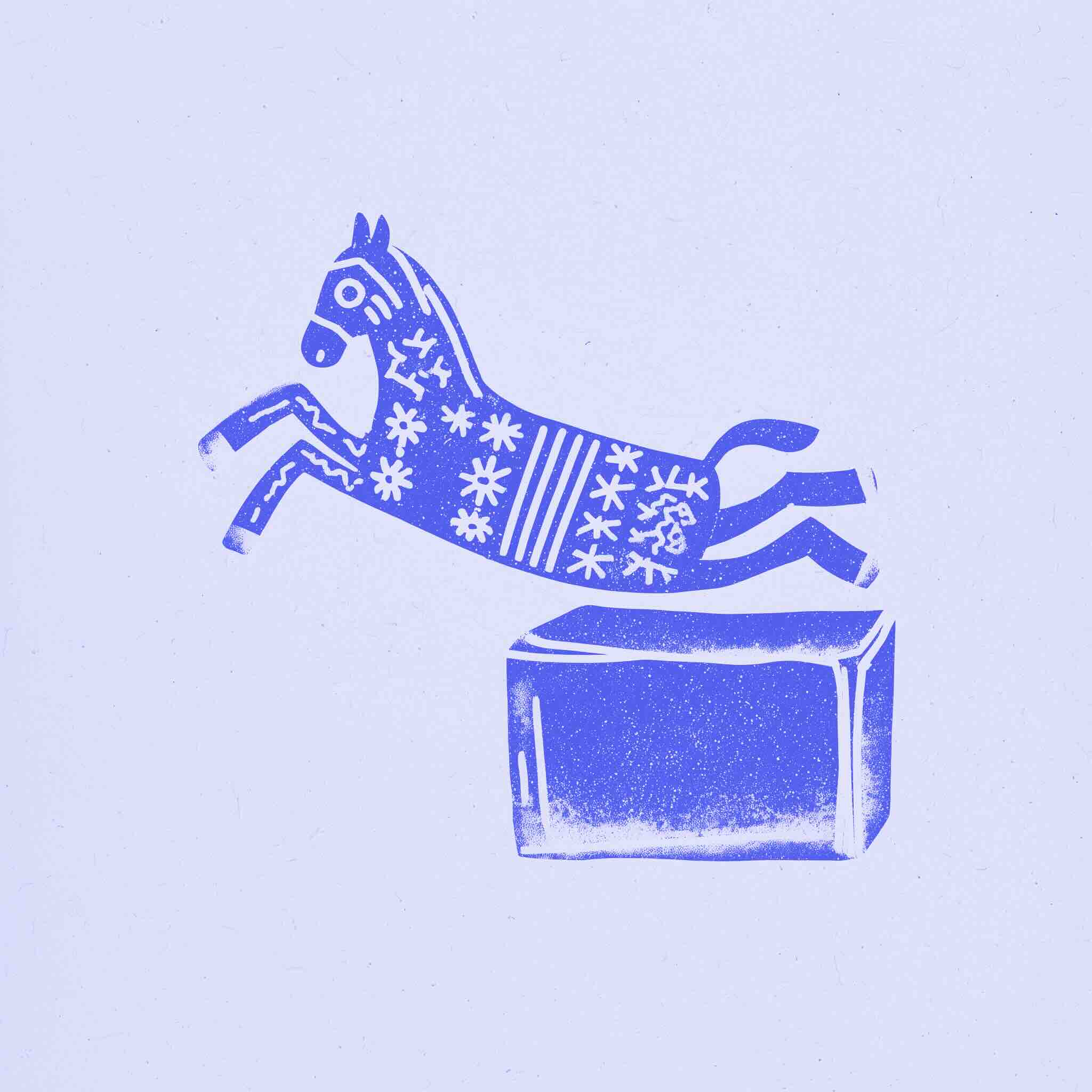
If sadness sometimes weighs us down, it is above all because we give it priority over ourselves. Rather than seeing it as strong and insurmountable, we should see it as a wild horse: with a minimum of discipline and clarity of mind, you can tame this animal and lead it wherever you wish.
Sadness is a mount that allows you to go further
If some people are glad never to feel sadness, we could reasonably pity them. A person who completely ignores part of their emotional spectrum cannot be considered whole. To be a complete man or woman, one must be able to feel the full range of human emotions. Without having experienced a given emotion ourselves, it becomes difficult to show empathy toward someone going through a feeling that is foreign to us.
This inability to recognize or understand certain emotions distances us, at least in part, from the deep bond that unites us with humanity. You no doubt know the saying, “If you want to go fast, go alone; if you want to go far, go together.” Well, it is more or less the same with sadness. Without ever feeling sadness, one can undoubtedly achieve more things, more quickly, but at the cost of a split from the rest of humanity around us, and, in the end, something essential is truly missing in our life. An existential or moral emptiness can then take hold, despite undeniable material success. So yes, sadness can slow down our daily momentum, but it has the advantage of potentially keeping us connected with the people who share our life.
Feel gratitude even when it seems difficult
This reflection on sadness can in fact be a broader reflection on gratitude in general, which is somewhat counterintuitive. The rule of gratitude can be stated as follows: God communicates with you at every moment; your role is to see His presence in each instant. To practice gratitude is to recognize His manifestation and His presence. To be ungrateful is to ignore His presence and close your heart. It is not always easy to walk with an open heart, but it is the only way that guarantees we remain connected to God at all times. Accepting sadness, and even welcoming it with joy, is the best way to transcend it.
Living to develop the inner life
If people are unhappy, it is above all because they spend very little time developing their mind. Most human concerns are ultimately focused on the external: money, status, possessions, and so on. While these things can of course be useful in some cases, they are not enough, on their own, to fulfill us and make us truly strong. Any strength that manifests itself through having rather than being is not a true attribute of power. If you can carry these qualities with you beyond this life, then they are indeed elements that make you genuinely stronger.
To be happy, choose to accumulate qualities
While it is true that we can accomplish more material things with money, these achievements only truly have value when our soul is developed enough to appreciate them. A poor inner life will almost inevitably go hand in hand with a desire to increase external achievements as a form of compensation. Conversely, a strong spirit can be content, and even find happiness, in limited or even precarious material conditions.
If you develop your mind, you focus on what matters most
The problem with seeking only material achievement is that you will never be satisfied with it. Worse still, all the work you have done will have been in vain, because you cannot take your possessions with you into the hereafter or into future lives. Worse again, all these material gains will often have been acquired at the expense of developing the quality of your soul. It is therefore a very bad bargain to bet everything on the external.
Acting in this way is the sign of a narrow vision, one that believes existence lasts only for the span of a single life, when in reality it is much longer. Life on earth is only a passage in a story with many pages. Our short life is simply an opportunity to improve ourselves so as to reach new dimensions of consciousness and live more happily when we no longer live here below.
From now on, think in terms of consciousness rather than external success
All external success should be the consequence of a fulfilled inner life and not the condition for beginning to develop this inner life. There is a fundamental order to respect. Material success is acceptable only when one’s spirit has been developed. True success takes into account the long term, that is to say real time, the time that unfolds over several lives. It would therefore be foolish to develop something transitory at the expense of what is lasting and intrinsic.
To serve or to serve oneself
One of the most direct ways to find joy in daily life is to serve a cause. To serve is a way of showing humility, and it is only in humility that we can connect to God. To serve oneself means to use one’s strength to gain access to what lies within our reach. To systematically rely on external attributes to find happiness is a path that inevitably leads us away from God.
Final note: the importance of movement
You have no doubt noticed that people who are constantly negative or pessimistic are often lethargic, as if frozen in a kind of inner and outer immobility. This is obviously not an absolute rule. Some wise or mystical figures also appear, at first glance, to be not very dynamic. The difference is that they have reached such a degree of mastery over their energy that they avoid all unnecessary movement.
Make no mistake: most of those we call wise have, at some point in their life, gone through an intense phase of action, commitment, and movement. Movement is a wonderful school of positive feelings: it oxygenates the body, opens the mind, and sets the soul in motion. A person who gets used to moving is in fact giving themselves the opportunity to be moved, to transform, and to raise, step by step, their level of consciousness.
We can thus distinguish two kinds of slowness:
– the one that concentrates power, born of mastered and channeled energy;
– and the one that, on the contrary, reveals a lack of drive, energy, and will.